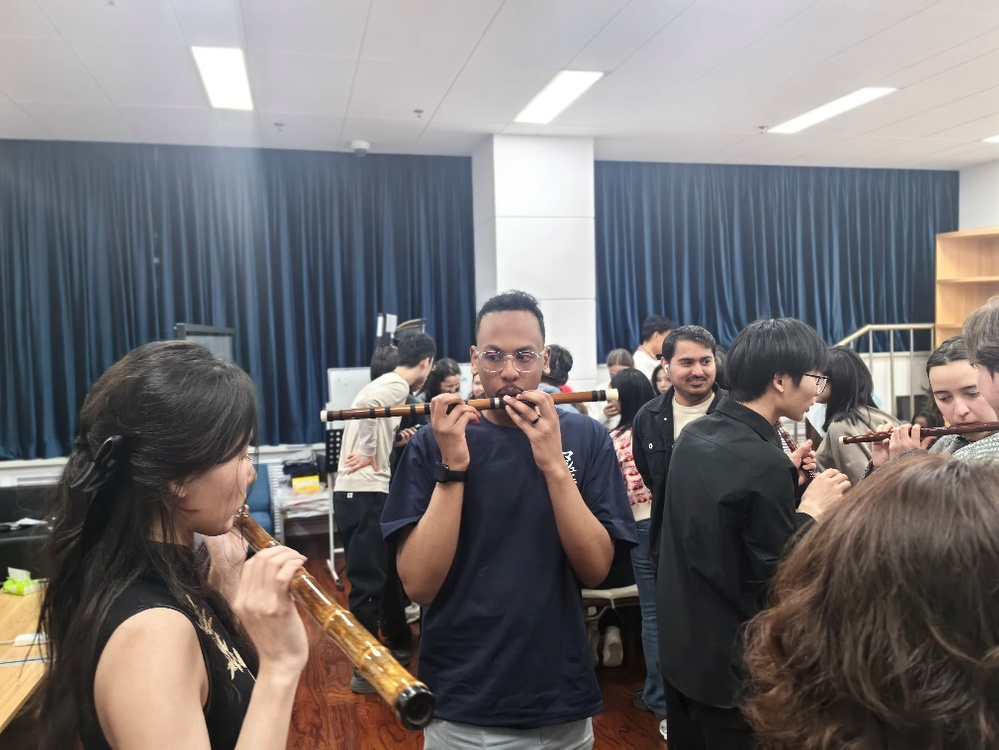

On April 24, the Library of Harbin Institute of Technology (HIT) joined hands with the Heilongjiang Provincial Guqin Association to host a Qin-Xiao (Chinese zither and vertical bamboo flute) music sharing session in Room 418 of the library on the main campus.
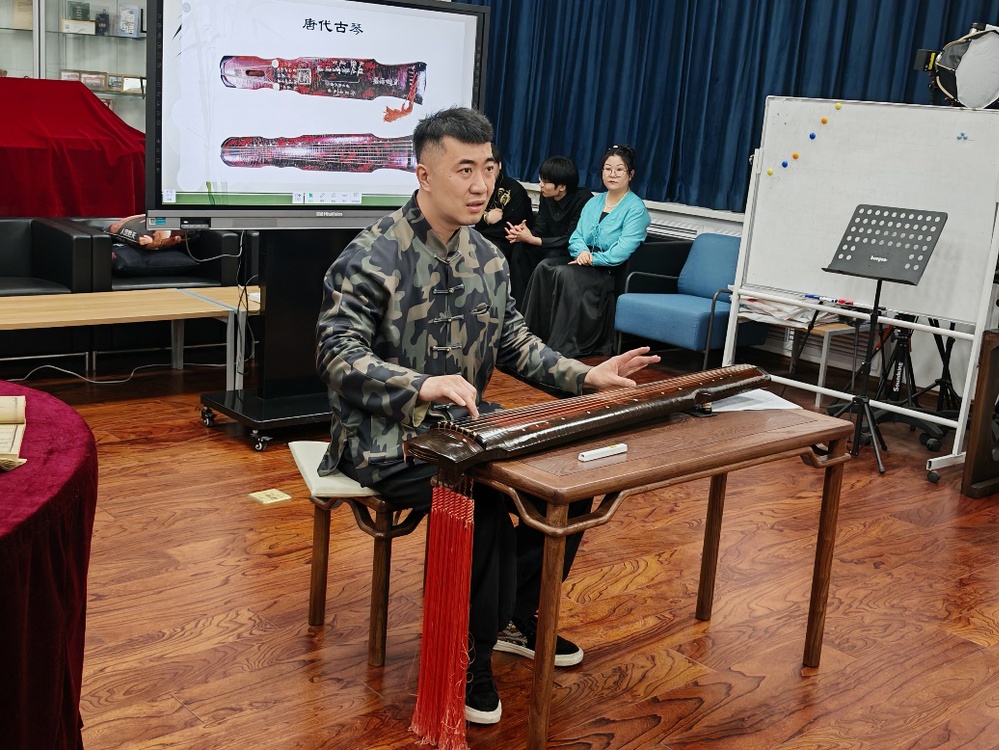
The melodious sounds of the Guqin and Dongxiao filled the venue, infusing the campus with cultural elements and enabling students to experience the charm of poetry, books, rituals, and music. At the outset of the event, Li Shuguo, President of the Heilongjiang Provincial Guqin Association, expounded on the musical character and cultural heritage of the Guqin, while Meng Long from Harbin Normal University analyzed the tonal qualities of the Dongxiao (vertical bamboo flute), deepening teachers' and students' understanding of the cultural connotations of both instruments.
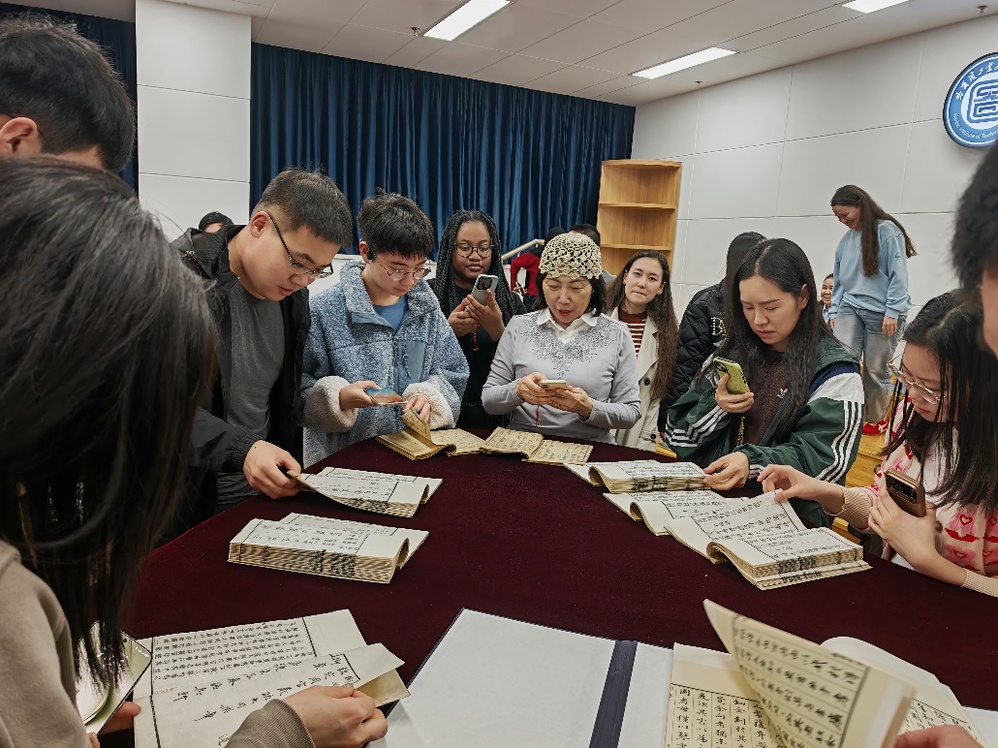
A distinctive feature of the sharing session was the immersive display of precious ancient books. The Qing-dynasty Jiaqing-era block-printed edition of Qinpu Xiesheng, the earliest existing music score for Guqin-Dongxiao duet, was showcased, allowing students to peruse it and trace the lineage of traditional music. Additionally, there were instructional sessions on reading Jianzi notation (a traditional Chinese musical notation system for the Guqin) and Dongxiao notation, ensuring that traditional cultural knowledge truly resonated with the participants.
The performance brought the atmosphere to a fever pitch, with a variety of classic pieces each showcasing unique characteristics. The grand finale, a Guqin-Dongxiao duet titled Qingming Rain on the River, featured a captivating blend of ancient charm and modern sounds, earning resounding applause. During the interaction, musicians guided teachers and students in trying their hands at playing the Guqin and Dongxiao, making traditional culture tangible and engaging.
This sharing session represents an innovative practice by the HIT Library in advancing cultural education and exploring the integration of cultural experience & aesthetic education practice, injecting traditional cultural elements into the scholarly campus environment.